
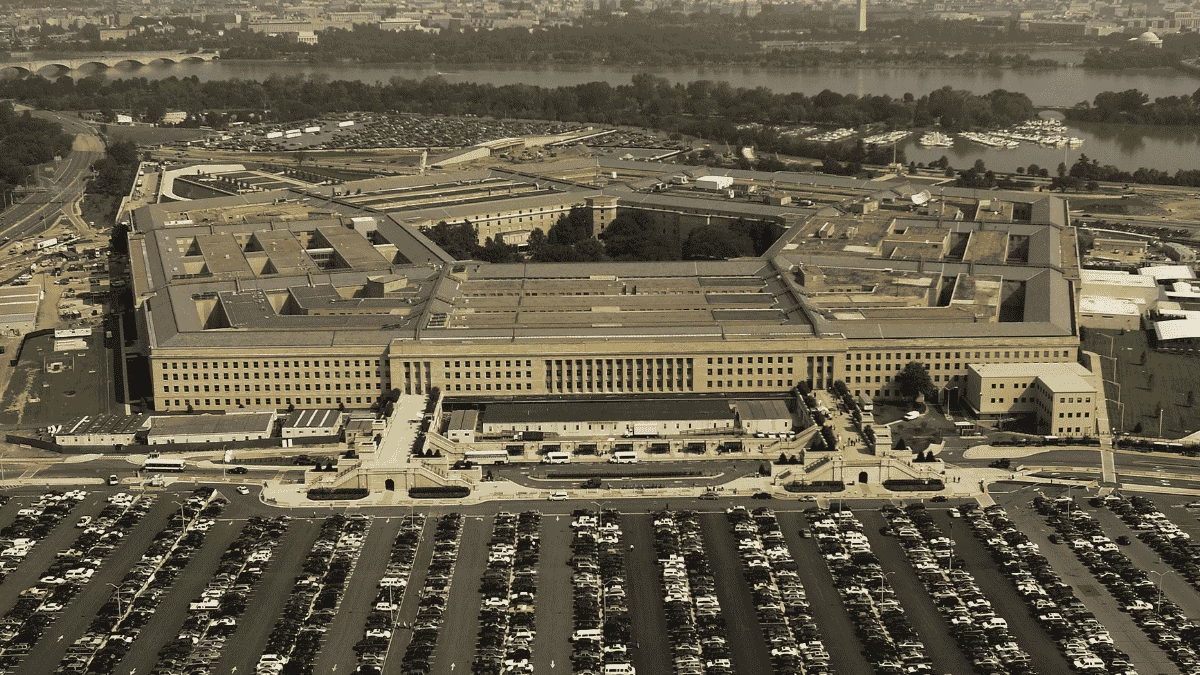
The conversation around America’s military identity took a dramatic turn when former President Donald Trump suggested renaming the Pentagon—the Department of Defense—back to its historic title, the Department of War. This proposed Trump Pentagon name change has sparked intense discussion about America’s military posture, symbolism, and the implications for national security policy.
The Case for Renaming: Trump’s Perspective
Donald Trump, speaking in multiple public appearances in 2025, expressed strong dissatisfaction with the current name, the Department of Defense. He argued that the term “defense” sounded too passive for a nation that often acts offensively to secure its interests globally. During remarks made in the Oval Office and in a joint press conference with South Korean President Lee Jae Myung, Trump emphasized that the department was originally called the Department of War during America’s victorious campaigns in World War I and World War II.
Trump said, “When we won World War I, World War II, it was called the Department of War. And to me, that’s really what it is. Defense is part of it, but we want offense too.” He also criticized the post-war renaming as a product of “political correctness,” suggesting that the more assertive title better reflects America’s military strength and history.
Trump’s Defense Secretary nominee, Pete Hegseth, who has been vocal about restoring the “warrior ethos” to the Pentagon, supports this rebranding. He even referred to himself as “Secretary of War” during public appearances, signaling an ideological shift within the Pentagon’s leadership toward prioritizing combat readiness and strength over passive defense.
Historical Background: From War Department to Department of Defense
The original Department of War was established in 1789 and oversaw U.S. Army affairs for over 150 years. The department was central to America’s military operations during its formative wars and expanded its role to include key infrastructure, military education, and relations with Native American tribes.
In 1947, following the end of World War II, President Harry Truman overhauled the military structure to create a more unified defense apparatus. This reorganization split the Department of War into separate branches — the Army and the newly created Air Force — and merged them along with the Navy under the umbrella of the Department of Defense. Truman’s intent was to centralize command, streamline coordination among the branches, and emphasize a global peacekeeping and deterrence mission rather than outright warfighting.
For nearly 80 years, the Pentagon’s Department of Defense has symbolized a modern approach to military strategy focused on safeguarding national security through deterrence and defense, not aggressive offense.
Political and Legislative Challenges
Although Trump indicated that the Trump Pentagon name change is imminent, the reality is complex. Changing the department’s name requires Congressional approval because the Department of Defense was established by a federal law—the National Security Act of 1947. This means the president cannot unilaterally rename the powerful defense agency, and any such proposal will likely face strong scrutiny and debate in Congress.
Moreover, the idea of renaming the Pentagon has polarized opinion beyond politics. Military strategists, diplomats, and legality experts question whether such a symbolic change might inadvertently increase militaristic tensions domestically and internationally. Critics caution that framing America’s military posture as exclusively offensive could impact diplomatic relations, alliances like NATO, and America’s role as a global peacekeeper.
What This Means for U.S. Military Identity and Global Strategy
The proposed reversion to the Department of War goes beyond semantics. It embodies a broader shift in how the United States views its military presence and ambitions. Trump’s rhetoric and his administration’s signaling suggest a renewed emphasis on strength, readiness to engage in combat, and willingness to assert American power proactively.
This Trump Pentagon name change could affect military culture by reviving the “warrior ethos,” instilling pride and aggression in the ranks, and celebrating decisive combat victories. Internationally, it warns allies and adversaries alike that the United States may embrace a more robust, less restrained approach to global conflicts and national defense.
Conclusion: Symbolism with Real Effects
Whether the Pentagon officially reverts to the old title remains uncertain, but Trump’s push to restore the “Department of War” name has already reignited debate about America’s direction in military policy and global leadership.
By advocating for the name that defined American military power during its greatest 20th-century victories, Trump casts a vision of national strength and assertiveness. This pivot challenges the decades-long narrative of defense and deterrence with a call for offense and dominance.
As Congress and the public weigh in, the proposed Trump Pentagon name change offers a revealing glimpse into the evolving identity of the U.S. military and its role in shaping the future world order.